

La Fenice Theatre
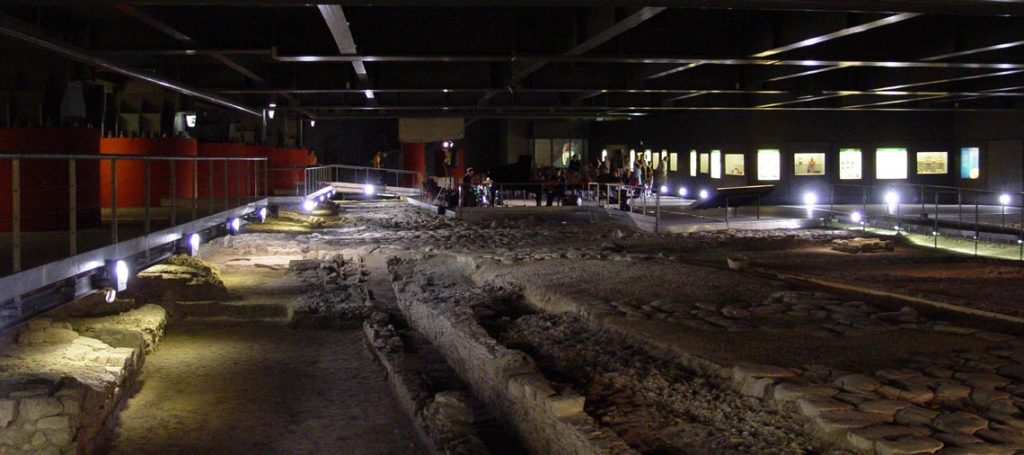
Inaugurated on December 5, 1996, it stands on the same site as the city’s previous theaters and above the archaeological area from which it is separated by well over two thousand years of history.
The La Fenice theatre was inaugurated on 5 December 1996 and stands on the exact same site as the previous city theatres and above the archaeological area from which it is separated by well over two thousand years of history.
The construction of the first municipal theatre was entrusted to the architect Pietro Ghinelli (1759-1834), one of the most important theatre architects who built 14 theatres including those in Pesaro (1818) and “The Muses” in Ancona (1826). Work began on October 18, 1828, and was completed in July 1830, but on the night of August 9, 1838, the theater was destroyed by fire.
Reconstruction work began in January 1839 and was completed in less than a year. The new municipal theatre was called “La Fenice”. In 1930 the earthquake condemned the theatre to forced unfitness and finally in 1944 it was hit by a bomb and its rubble was for a long time an open wound in the heart of the city.
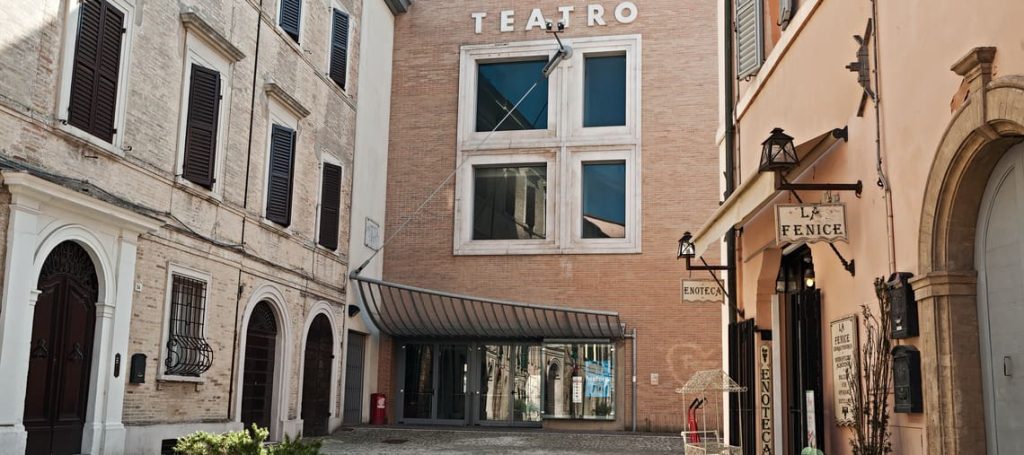
The current Teatro La Fenice was designed by architect Silvio Argentati. The Roman archaeological finds discovered during the works significantly influenced the theater’s design, which was therefore conceived as a multi-sided block, each characterized by an architectural image that harks back to the architecture of the city on which the building overlooks. In particular, the facade along Via Pisacane, facing the eighteenth-century part of the historic center, is characterized by a giant architectural order that finds its references in the architecture of the Portici Ercolani, the most significant urban structure of the eighteenth-century city.
The opposite façade, which instead looks inside the sixteenth-century walled city, consolidated under the rule of the Della Rovere family, is characterised by figures that hark back to the architecture of that period, such as the large quadripartite window that illuminates the foyer, similar in shape to the quadripartite windows present in various architectural works of the time such as, in Senigallia, in the Convent of the Grazie.
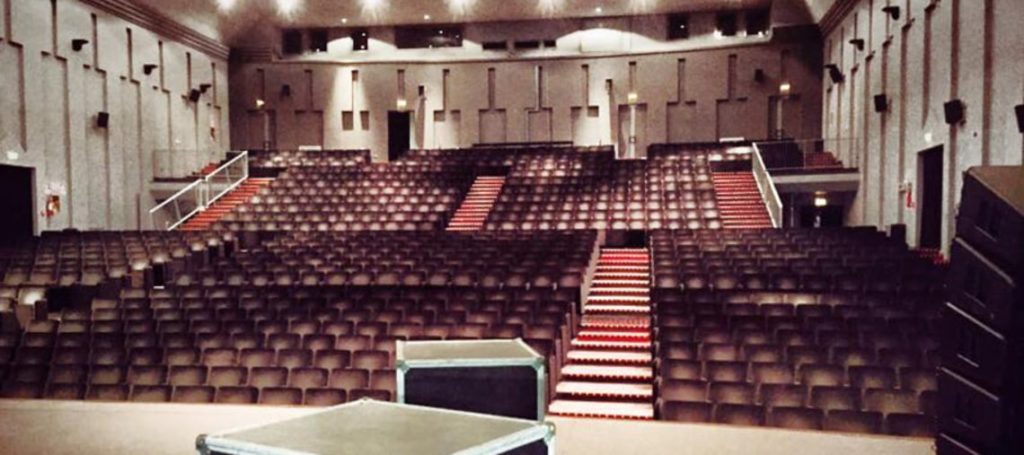
The Teatro La Fenice hall consists of a single large rectangular hall (32.80 x 24.70 m) with a stepped floor of progressively increasing height that exceeds a difference in height of 5.82 m. The hall has a capacity of 874 seats. It is a multifunctional facility suitable for opera, ballet, concerts, prose theatre and cinema performances.
In the indoor spaces of the Teatro La Fenice, you can connect to the “Senigallia-Wifi” network for free by downloading the Wifi.Italia.it app and completing the registration process. Those who already have it will also be able to register through their digital identity (Spid).
Discover the theatre season programme
Scopri la Storia ed i segreti del Teatro di Senigallia
Ricostruito sulle ceneri dell’antico Teatro storico, il nuovo Teatro La Fenice è un piccolo gioiello di tecnologia, che racchiude architetture moderne, preziosi tesori, come il meraviglioso sipario di Cucchi e cela, nelle sue fondamenta antichi resti di civiltà romaniche.
The La Fenice theatre was inaugurated on 5 December 1996 and stands on the exact same site as the previous city theatres and above the archaeological area from which it is separated by well over two thousand years of history.
The construction of the first municipal theatre was entrusted to the architect Pietro Ghinelli (1759-1834), one of the most important theatre architects who built 14 theatres including those in Pesaro (1818) and “The Muses” in Ancona (1826). Work began on October 18, 1828, and was completed in July 1830, but on the night of August 9, 1838, the theater was destroyed by fire.
Reconstruction work began in January 1839 and was completed in less than a year. The new municipal theatre was called “La Fenice”. In 1930 the earthquake condemned the theatre to forced unfitness and finally in 1944 it was hit by a bomb and its rubble was for a long time an open wound in the heart of the city.
The current Teatro La Fenice was designed by architect Silvio Argentati. The Roman archaeological finds discovered during the works significantly influenced the theater’s design, which was therefore conceived as a multi-sided block, each characterized by an architectural image that harks back to the architecture of the city on which the building overlooks. In particular, the facade along Via Pisacane, facing the eighteenth-century part of the historic center, is characterized by a giant architectural order that finds its references in the architecture of the Portici Ercolani, the most significant urban structure of the eighteenth-century city.
The opposite façade, which instead looks inside the sixteenth-century walled city, consolidated under the rule of the Della Rovere family, is characterised by figures that hark back to the architecture of that period, such as the large quadripartite window that illuminates the foyer, similar in shape to the quadripartite windows present in various architectural works of the time such as, in Senigallia, in the Convent of the Grazie.
The Teatro La Fenice hall consists of a single large rectangular hall (32.80 x 24.70 m) with a stepped floor of progressively increasing height that exceeds a difference in height of 5.82 m. The hall has a capacity of 874 seats. It is a multifunctional facility suitable for opera, ballet, concerts, prose theatre and cinema performances.
In the indoor spaces of the Teatro La Fenice, you can connect to the “Senigallia-Wifi” network for free by downloading the Wifi.Italia.it app and completing the registration process. Those who already have it will also be able to register through their digital identity (Spid).
Gallery
Where
Contacts
Address
Cesare Battisti
You might also be interested
Senigallia Turismo Digitale - Questo intervento è stato realizzato con il contributo dell’Unione europea Bando POR FESR Marche 2021-2027 - Asse 1 - Azione 1.2.2 - Int. 1.2.2.2 Bando per “Servizi digitali integrati”



