Church and Convent S. Maria delle Grazie
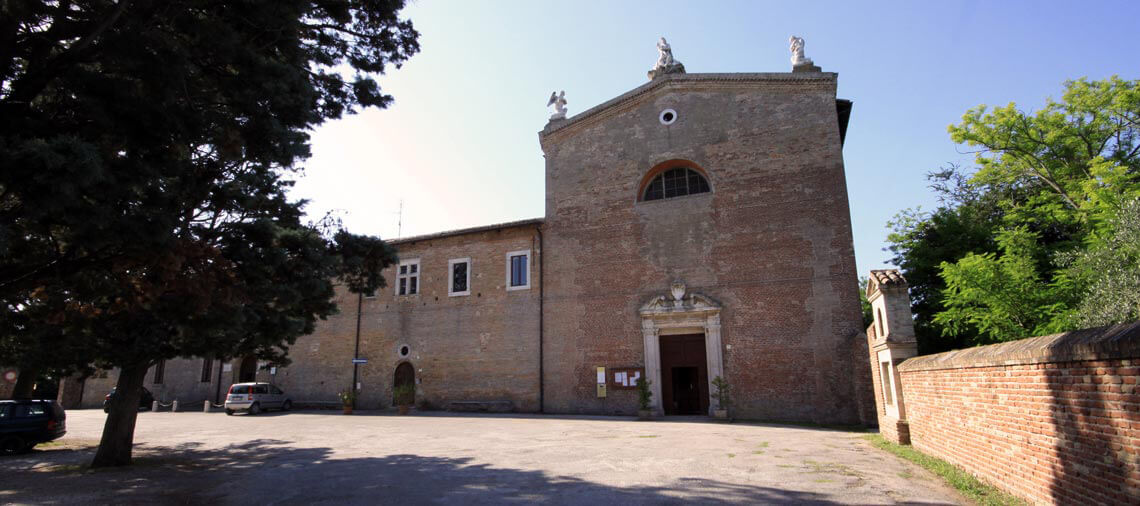
The Church and Convent of Santa Maria delle Grazie is an important testimony to Renaissance architecture dating back to the last decade of the 15th century and sees the participation first of Baccio Pontelli and then of Girolamo Genga, two of the greatest Italian architects of that extraordinary artistic era.
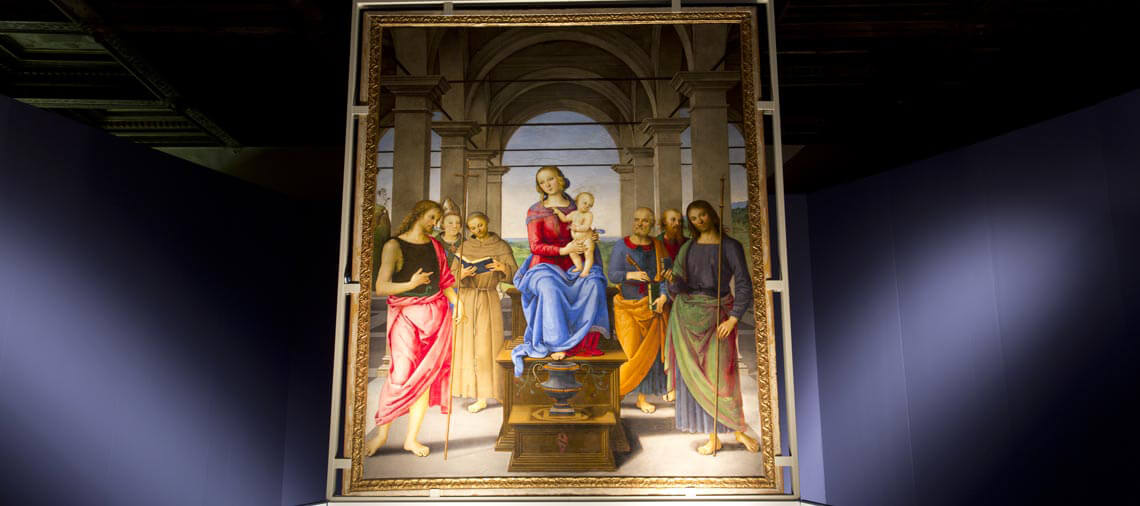
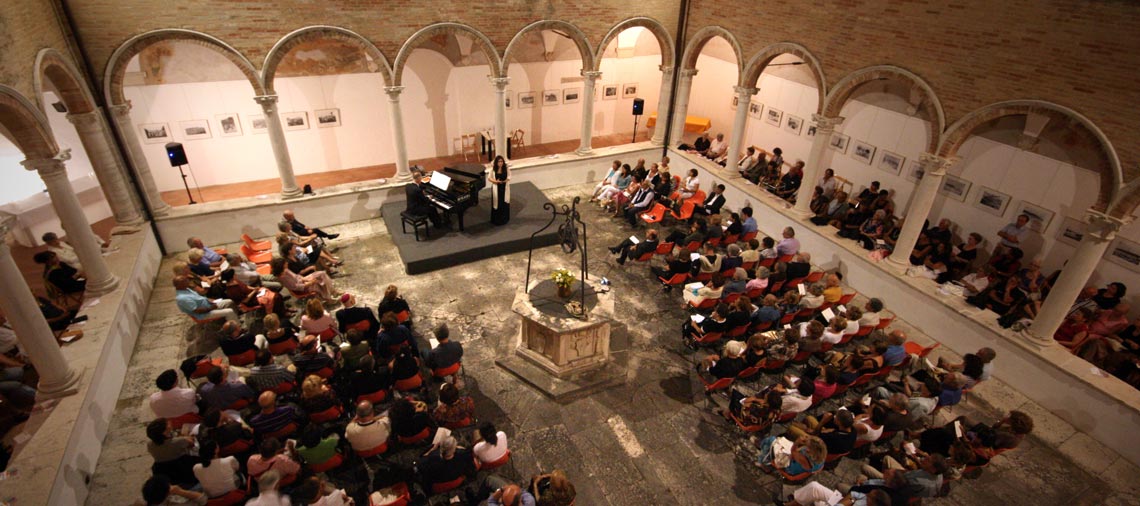
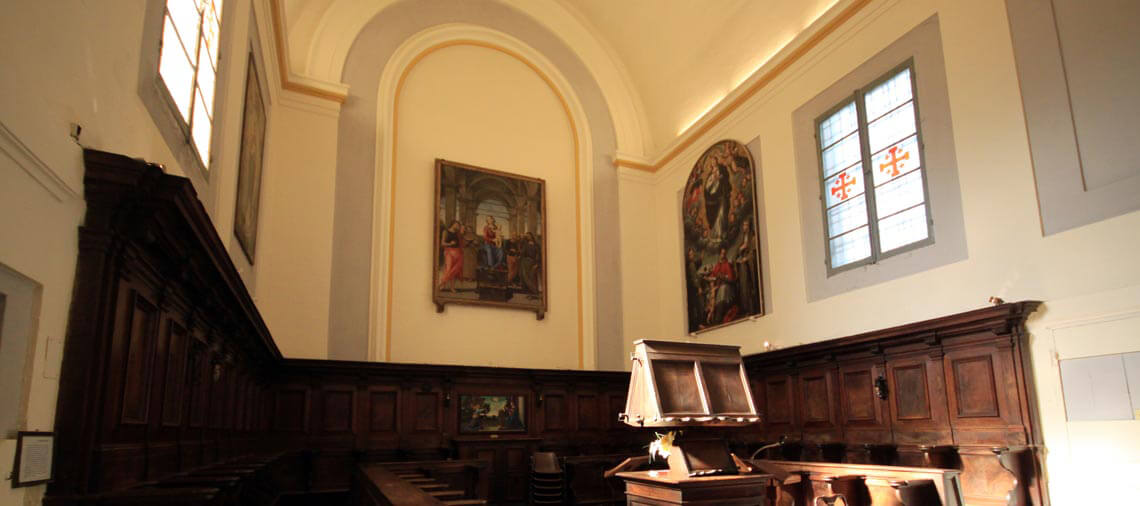
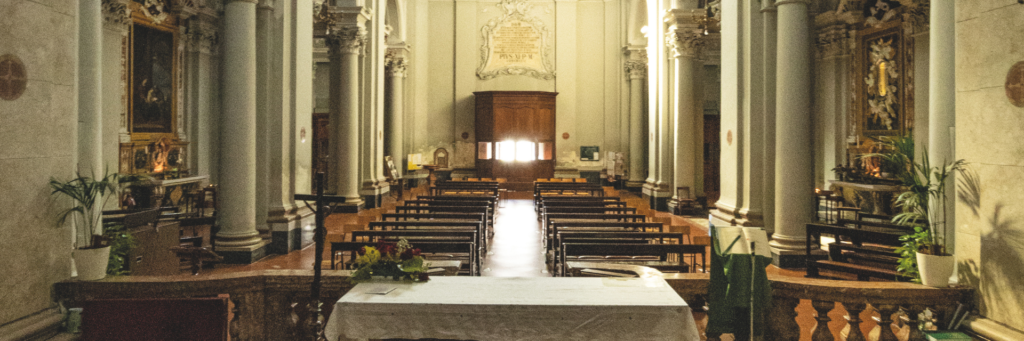
On the site where the church and convent of Santa Maria delle Grazie now stand, there was a votive shrine or small chapel called Santa Maria del Pennocchio” around which a large wooded area extended. According to a tradition that arose already at the end of the sixteenth century, Giovanni della Rovere, Lord of Senigallia, had the church and convent built as a vow to the Madonna for the birth of the long-awaited male heir, Francesco Maria, which took place in Senigallia on 25 March 1490. The design and construction of the architectural complex was entrusted to the Florentine architect Baccio Pontelli and the first friars took up residence there as early as 1492. The building was subsequently revised and expanded, according to Vasari’s historical testimony, by the architect Girolamo Genga at the behest of Francesco Maria Della Rovere, in an intervention certainly begun before the Duke’s death in 1538. The most recent studies believe that when Giovanni voted for the birth of Francesco Maria, he decided to build the church to make it the mausoleum of the Della Rovere family, just as the church of San Bernardino in Urbino was intended to house the remains of the Montefeltro family. And so in Santa Maria delle Grazie are buried in addition to Giovanni himself, his brother-in-law Antonello Sanseverino, Prince of Salerno; his daughter Girolama; and his mother Teodora Manerola. The entire complex was finally completed only in 1684, thanks to the initiative of Vittoria Della Rovere, Grand Duchess of Tuscany (remembered by the Medici coat of arms on the façade, above the portal), the last direct descendant of Giovanni to bear the name of the illustrious dynasty. The interior of the church is simple and essential. Two Renaissance masterpieces were preserved here: “Madonna and Child with Saints” by Perugino and the “Madonna of Senigallia”, by Piero della Francesca. The first panel is now on display at the diocesan art gallery of Senigallia, the second is located in the National Gallery of the Marche in Urbino. Of interest is the valuable hand wash of exquisite fifteenth-century workmanship located in the sacristy. Today, part of the convent houses the “Sergio Anselmi”” Museum of the History of Mezzadria, rich in precious testimonies on peasant civilization. The convent’s two cloisters are frescoed with 28 and 19 lunettes depicting episodes from the life of Saint Francis of Assisi, painted in 1598 by the painter Pietro Francesco Renulfo.
Gallery
Where
Scan the QR code
To reach the point of interest
Strada Comunale delle Grazie 2
Distance by car: 8 min RaggiungiContacts
Address
Strada Comunale delle Grazie 2
You might also be interested
Senigallia Turismo Digitale - Questo intervento è stato realizzato con il contributo dell’Unione europea Bando POR FESR Marche 2021-2027 - Asse 1 - Azione 1.2.2 - Int. 1.2.2.2 Bando per “Servizi digitali integrati”



