Description
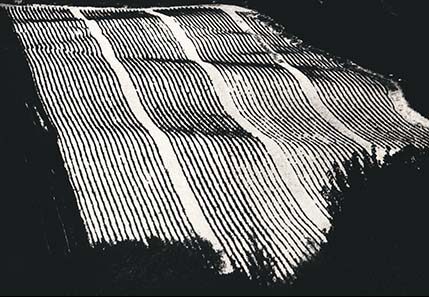
2020 marked the twentieth anniversary of the death of Mario Giacomelli and the Municipality of Senigallia, City of Photography, continues to pay homage to one of the international masters of twentieth century photography in 2021, dedicating a wing of Palazzo del Duca to a permanent exhibition of his works donated in the 90s by the artist himself to the Municipality. 2020 marked the twentieth anniversary of the death of Mario Giacomelli and the Municipality of Senigallia, City of Photography, continues to pay homage to one of the international masters of twentieth century photography in 2021, dedicating a wing of the Palazzo del Duca to a permanent exhibition of his works donated in the 90s by the artist himself to the Municipality. In a redeveloped portion of Palazzo del Duca, which for years has hosted the exhibition program of the city of Senigallia, approximately 80 photographs will be available, selected and set up in collaboration with the Giacomelli archives represented by the two directors Simone Giacomelli and Katiuscia Blonde. Not a temporary exhibition, therefore, but a real museum that aims to tell the poetic and artistic universe of the great Senigallian photographer and make it permanently accessible to citizens and visitors. In addition, we want to provide an innovative reading of the master’s work which is proposed not in an anthological way, that is, for years and series, but retraces his poetics, highlighting themes and suggestions. The salient trait of the personality – private and photographic – of Mario Giacomelli is the strong rootedness to his land, reluctantly he moved from it, but despite this he succeeded right away through his art to overcome geographical boundaries being his work characterized by a strong spirit of experimentation and from a voracious will to research “ Giacomelli starts from reality not to document it with pretended objectivity, but to raise the particular to the universal, to direct time towards the circular infinity of eternal return. ” – writes Katiuscia Biondi – “< em> He uses photography to immerse himself in the world, and in his own bowels, recognizing himself as a sort of purifying rite. The individual shots are insoluble frames of a single story, that of his life and his relationship with the world, and each photo refers to the others in a symbolic and signic stylistic unity that only a master can pursue with such coherence and evocative power < / em> “. He didn’t move much from Senigallia, he visited Scanno, Lourdes, Loreto, Puglia and Calabria, but it was from the landscape and the characters of his land that he drew heavily: the seminarians of “ I have no hands to caress my face “, the elders of the hospice of” Death will come and have your eyes “, the countryside with the people who live there, the lovers inspired by the anthology of Spoon River , the portraits, all tell about Senigallia and its territory, from the sea to the hinterland. “ Giacomelli starts from reality not to document it with pretended objectivity, but to raise the particular to the universal, to direct time towards the circular infinity of the eternal return. ” – Biondi continues – “ Making his own the teaching of the master Cavalli, for a photograph freed from the pure document that there is no world beyond our gaze, Giacomelli takes this vision to excess, in his dramatic way of making reality resonate “. To complete the permanent exhibition, a temporary exhibition The realities of the Dream from xx to xx at Palazzetto Baviera which aims to document that “Senigallian laboratory” of photography that was the Misa Group founded by Giuseppe Cavalli in 1954 in which a young and curious Giacomelli joined for a short time together with Ferruccio Ferroni: a group that contributed to the important theoretical debate that took place in Italy in those years around the functions and aesthetics of photography. Selected works by Giacomelli, Ferroni and Cavalli always coming from the collected Civics, alongside their disciples and followers, who gave life to the Misa Group. A common milieu which however produced very different results, both in the photographic rendering, in the technique and in the poetics of the various authors, an extraordinary laboratory of ideas that had a short but intense life and from which the genius of Mario Giacomelli it distinguished itself and developed throughout the second half of the twentieth century.
Event Dates
to the: January 1, 2031 11:00 pm
Where
Other Information
Categories
Evento culturale, Mostra
Senigallia Turismo Digitale - CUP H17H24001440006 - Questo intervento è stato realizzato con il contributo di 45.000€ dell’Unione europea Bando POR FESR Marche 2021-2027 - Asse 1 - Azione 1.2.2 - Int. 1.2.2.2 Bando per “Servizi digitali integrati”



