Stage 1 – Historic Center of Senigallia
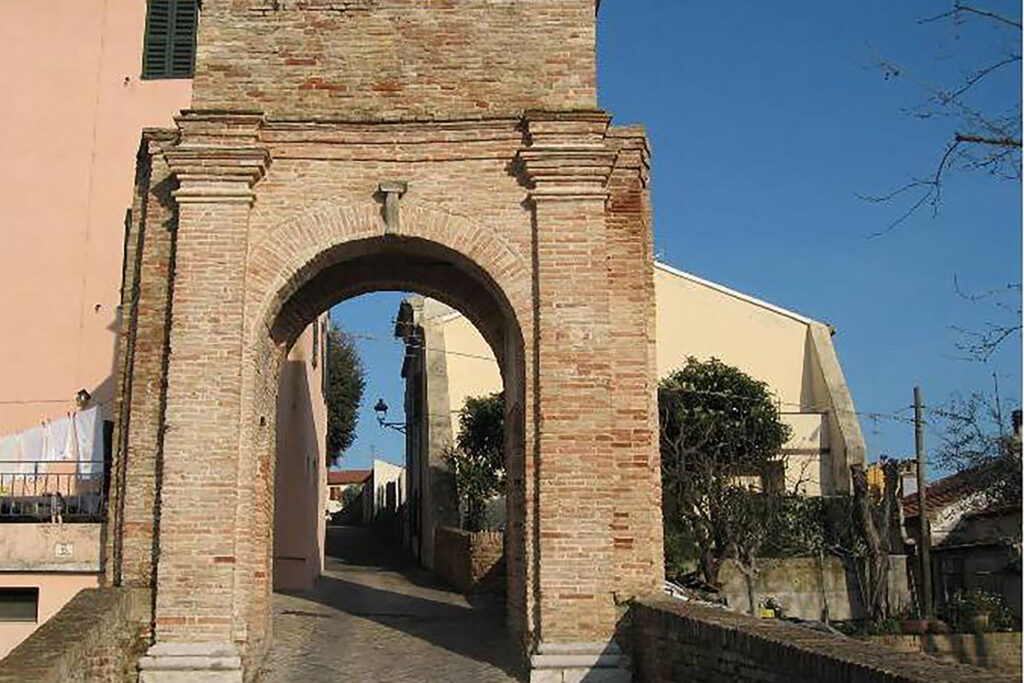
The itinerary to discover the hills and villages that enliven the surroundings of Senigallia begins in the heart of the city, with a short tour of the historic center. We start from the Rotonda, following the seafront until we reach the imposing Foro Annonario, a harmonious neoclassical brick structure, designed in 1834 by the Senigallia architect Pietro Ghinelli. The circular square houses the daily fruit and vegetable market and, under the portico of 24 Doric columns, numerous local food and wine shops. The Foro Annonario is also the stage for cultural events and today houses the Antonelliana Library and the Municipal Archives, becoming the cultural heart of the city.
After exploring the Foro Annonario, you head towards the nearby Piazza del Duca, where the majestic Rocca Roveresca stands out, a Renaissance fortress with a quadrangular plan and four cylindrical towers at the corners. Its current form dates back to 1476-1482, the result of the works of Giovanni Della Rovere based on a design by Luciano Laurana and Baccio Pontelli, incorporating vestiges of previous fortifications.
Continuing, the route leads to Piazza Saffi, from which you take Viale Matteotti to the historic Church of Portone or Santa Maria della Neve. The church, with three naves visible from the façade, houses paintings of the seven sacraments and a magnificent Pincetti pipe organ, still used today during the summer Organ Festival.
After leaving the historic center, the itinerary moves towards the coast, towards the maritime hamlet of Marzocca.
Stage 2 – Marzocca
Located on the border with Montemarciano, Marzocca extends along a gravel beach with a sandy bottom and has boasted the Blue Flag since 1996. The history of the village is ancient: until the 14th century, the sea lapped the area, while in the following centuries, fishing and cultivation of the area shaped the local economy.
A must-see is the Church of Sant’Antonio da Padova, built in 1979 to a modern design with a circular plan and a dome inspired by the Pantheon, with frescoes by the Aletti Center depicting the Passion of Christ. On the seafront there is also the Madonnina del Pescatore, a small brick sanctuary from the ’30s, close to the beach. Not far away, the botanical garden of Moreno Cedroni, a famous Michelin-starred chef, adds a gastronomic and cultural touch to the hamlet.
From the coast you climb up towards the first hills, heading towards Montignano.
Stage 3 – Montignano
Montignano, a hilltop hamlet of Senigallia, preserves a medieval village that tells centuries of history. In the center of the town is the medieval Church of San Giovanni Battista, rebuilt after the 1930 earthquake and consecrated in 1933. The church has a Latin cross plan with three naves, pilasters with Corinthian columns, and a coffered roof; the apse houses three historiated single-lancet windows, while the interior houses the precious Callido organ from 1770. The patronal festivals, particularly that of San Giovanni Battista on June 28th, enliven the village with processions, concerts, and moments of local community gathering.
Outside the center, just beyond the cemetery, is the Albani Tower, built at the end of the fifteenth century by the Della Rovere family as a lookout and defense garrison. The tower, located in a panoramic position, allowed visual communication with Senigallia, Montemarciano and other towers in the area, signaling dangers and incursions by sea. Restored over the centuries, it preserves the Albani family coat of arms and represents a historical symbol of the military strategy and memory of the area. From the top of the hill, the view extends over the surrounding hills and the Adriatic coast, offering ideal glimpses for photography and nature lovers.
Montignano is also a starting point for exploring the surrounding hills and tasting typical local products, such as wine, oil, and cheese, an expression of the area’s agricultural tradition. After leaving the village, the route continues towards the hamlet of Castellaro, immersing yourself in the Senigallia hills and the local food and wine excellence.
Stage 4 – Castellaro
Castellaro is a must-see for wine lovers. Cantina Giusti, nestled in the hills, produces organic wines such as the famous Lacrima, an expression of the Marche region, continuing a family tradition since 1930. After the wine stop, the walk crosses the hills passing through the small village of Grottino until reaching Filetto.
Stage 5 – Filetto
An ancient town, inhabited since the Neolithic, Filetto is home to the Church of Santa Maria del Filetto, linked to the Knights of Jerusalem and rich in historical Jews. The village has also been the site of Roman and Byzantine settlements, which have left traces in the area.
Continuing, you pass through the hamlet of Bettolelle, where you can stop at Cantina Mezzanotte, famous for its native wines such as Verdicchio and Lacrima di Morro d’Alba.
From here, the itinerary heads towards Sant’Angelo.
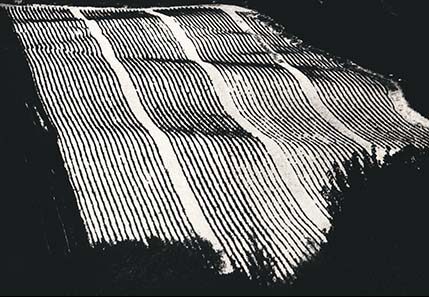
During this stretch, the surrounding hills offer panoramic views where you can recognize the compositions dear to Giacomelli: rows, fields and hills that seem suspended in time.
Stage 6 – Sant’Angelo
Sant’Angelo is a hilly hamlet that offers breathtaking views of the coast and the surrounding countryside, also immortalized in the famous works of photographer Giacomelli. The village still retains the atmosphere of ancient rural settlements, with narrow alleys and stone houses that tell centuries of local history. The Church of Sant’Angelo, dating back to the 11th century, preserves the community’s religious traditions, while the village’s small oven is a daily meeting place, where the aroma of fresh bread and sweets accompanies the lives of residents and attracts visitors eager to savor traditional recipes.
From the Sant’Angelo hill, the route slowly descends towards the next hamlet, Le Grazie.
This stretch of road also offers two points of interest for Giacomelli photography lovers.
Stage 7 – Le Grazie
The Santa Maria delle Grazie complex, including the church and convent, was designed by the architect Baccio Pontelli in 1491 at the behest of Giovanni Della Rovere, lord of Senigallia. Over the centuries, the complex has served a spiritual, educational, and cultural function in the area, hosting the Friars Minor and becoming a point of reference for the community. After a long and careful restoration, the church reopened in 2024, returning to being a center of worship, a venue for cultural events and community events.
In addition to the religious spaces, the complex houses the Mezzadria Museum “Sergio Anselmi”, which chronicles peasant life and local agricultural traditions, illustrating the history of sharecropping and the peasant families who have lived and worked in the region for centuries. The museum offers a unique perspective on the connection between man, land, and material culture, making Le Grazie a fundamental stage in understanding the history of the Senigallia countryside.
After leaving Le Grazie, the itinerary heads inland to the hamlet of Roncitelli, continuing the journey through hills, history, and local traditions.
Stage 8 – Roncitelli
Roncitelli, documented since the year 1000, preserves Roncitelli Castle, built between the 13th and 14th centuries and linked to the Mastai family, including Pope Pius IX. The hamlet also offers the simple and charming Church of Santa Liberata, with a masonry spire bell tower. The Chiave di Cicchino Association collects and enhances the history of the village over the last hundred years.
Continuing towards the sea, the itinerary reaches Scapezzano.
Stage 9 – Scapezzano
From Roncitelli Hill, the route heads towards the hamlet of Scapezzano, an ancient walled village overlooking the greenery of the Senigallia countryside. Situated on a hill, the town offers spectacular views of the Adriatic coast and the surrounding hills, once essential for territorial control and now perfect for photography and landscape lovers. The view extends to the Catria, Nerone, and San Vicino mountains, and on clear days, you can see the Vettore, offering a unique glimpse of the Marche panorama.
The village still retains part of its medieval walls, with the evocative Torrione and the Clock Tower, witnesses to Scapezzano’s defensive and strategic history. The intimate and picturesque center is characterized by cobbled streets and stone houses, which recall the ancient origins of the village. At the center stands the Church of San Giovanni Battista, an elegant eighteenth-century building with a single nave, whose walls house important works of religious art.
Scapezzano is also the protagonist of the historical reenactment of the Siege of Scapezzano, which celebrates the village’s resistance in 1480 against pressure from Duke Giovanni della Rovere, lord of Senigallia. This annual event combines history, tradition and folklore, engaging the local community and visitors on an immersive journey into the past.
Near the village, you can make interesting food and wine stops: the Cantina e Frantoio Mazzola offers tastings of local wines and extra virgin olive oil, the fruit of agricultural tradition and respect for the area. Here you can discover the profound connection between history, land, and food and wine culture, enjoying an authentic experience of rural life in the Marche region.
After admiring the views, the medieval streets and the excellence of the area, the route continues towards the hamlet of Cesanella, the last stop on our itinerary, gently ascending towards the sea.
Stage 10 – Cesanella
Cesanella is home to the modern Church of San Giuseppe Lavoratore, characterized by a large circular exposed concrete structure and large windows that illuminate the interior. The building welcomes the faithful in a small and bright space, with the Baptistery and the painting of Our Lady of the Rosary as focal points of the community.